
韓基祥 Han Jixiang
Praying Mantis Boxing originated in Shandong, China. Inspired by the agility and spirit of the praying mantis, it integrates the strengths of various martial traditions. Since the Ming and Qing dynasties, it has been passed down through generations of martial artists for more than a century. Known for its speed, precision, skillful techniques, and continuous combinations, it remains one of the most distinctive and influential systems within traditional Chinese martial arts.
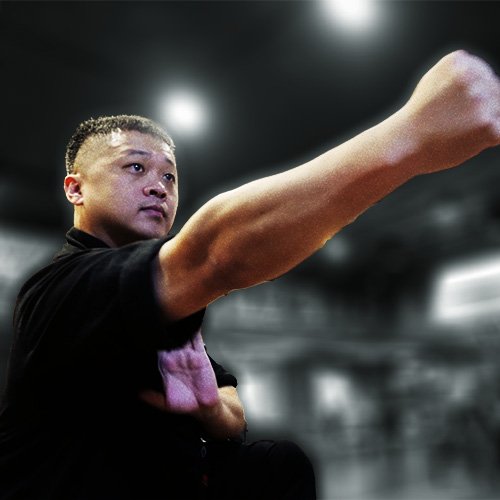
My name is Han Ji-Xiang, the grandson of the renowned Long Fist master Grandmaster Han Qing-Tang. For many years, I have been devoted to the research and teaching of traditional Chinese martial arts. I currently serve as an adjunct instructor in the Department of Physical Education at Fu Jen Catholic University, the coach of the National Taiwan University Chinese Martial Arts Team, the director of Hanmen Martial Arts Academy, and the Head Instructor of TsangWuGe’s Changquan Shú.
Recently, I was pleased to learn that my fellow martial brother Master Huang Wei-Xiu intends to join the Cang Wu Ge system and establish the Seven-Star Praying Mantis Boxing School, with the aim of promoting and preserving this traditional martial art. I am therefore honored to present the following recommendation regarding his martial background and accomplishments.
Master Huang Wei-Xiu and I share the same martial lineage. From a young age he devoted himself to martial arts training under the renowned Taiwanese Praying Mantis master Grandmaster Zhou Bao-Fu. Grandmaster Zhou is a highly influential figure in Taiwan’s martial arts community and was also one of the pioneers who first systematized traditional kung fu into instructional video recordings. Even today, in the famous “Kung Fu Dragon” instructional series, one can still see Master Huang appearing as a young demonstrator, a testament to the trust his teacher placed in him and to the solid foundation he had already developed at an early age.
Later in life, Master Huang traveled to Shandong, China, the birthplace of Praying Mantis Boxing, where he became a disciple of Grandmaster Zhong Lian-Bao, an important inheritor of Seven-Star Praying Mantis Boxing. Through this opportunity he received authentic transmission of the system and integrated the traditions of both Taiwan and Shandong. As a result, he has gained deep insight into the forms, combat methods, and theoretical principles of the art.
Over the years, Master Huang established the Tu Bao Zi Martial Arts Society in Taipei, dedicating himself to the study and promotion of Seven-Star Praying Mantis Boxing while training many students. His teaching and research have earned the respect of many within the martial arts community.
He now plans to establish the Seven-Star Praying Mantis Boxing School, offering both in-person and online instruction. Through this approach, the authentic teachings of this traditional martial art will be able to transcend geographical boundaries and reach students around the world.
From my observation, Master Huang Wei-Xiu not only possesses refined skill but also demonstrates a profound understanding of the lineage, philosophy, and spirit of traditional martial arts. His scholarship is rigorous, and his dedication to the study of Seven-Star Praying Mantis Boxing is both deep and sincere. He is truly a rare practitioner and researcher of this system in modern times.
I firmly believe that Master Huang will successfully promote the essence of Seven-Star Praying Mantis Boxing within the Cang Wu Ge system, carrying the tradition forward, strengthening the lineage, and allowing this remarkable martial art to spread throughout the world.
It is therefore my honor to offer this recommendation.
Head Instructor, Cang Wu Ge Long Fist School
Director, Hanmen Martial Arts Academy
Adjunct Instructor, Fu Jen Catholic University
Coach, National Taiwan University Chinese Martial Arts Team
螳螂拳源出山東,取象於螳螂之靈動,融採眾家技擊之長,自明清以來流傳武林,歷百餘年而不衰。其法以快、準、巧、連為宗,講求手法精妙、身步相隨,素為中華傳統武術中,極具代表性之拳種。
本人韓基祥,為一代長拳名家韓慶堂宗師嫡孫,長年從事國術研究與教學。現任輔仁大學體育系兼任教師、台灣大學國術校隊指導教練,韓門武集功夫學苑館長,並任藏武閣長拳塾塾長。今聞武林同道黃偉修師父願加入藏武閣體系,並將成立「七星螳螂拳塾」,以弘揚螳螂拳學,心甚嘉許,特為之述其武學淵源。
黃偉修師父與我為武林同門師兄弟,自幼投身武術修習,早年隨台灣螳螂拳著名大師周寶富老師習武。周寶富老師為台灣武術界極具影響力之人物,亦為最早將傳統武術系統化拍攝為功夫教學錄影帶的重要先驅之一。時至今日,在其所拍攝之《功夫龍》武術教學影片中,仍可見到黃偉修師父年輕時擔任示範之身影,可見其自青年時期即深得師門信任,功底紮實。
其後,黃師父因緣際會遠赴中國山東,拜入七星螳螂拳名家鍾連寶大師門下,潛心研習七星螳螂拳之拳理與技藝。山東為螳螂拳發源之地,鍾連寶大師亦為當代七星螳螂拳重要傳承者之一。黃師父得以親承其教,兼融台灣與山東兩地傳承之長,對七星螳螂拳之套路、技擊與理法皆有深入研究。
多年來,黃偉修師父於台北成立「土豹子拳社」,致力於七星螳螂拳之推廣與研究,培育後學,深受武術同道肯定。今更將成立「七星螳螂拳塾」,並以線上與實體並行之教學方式推廣拳學,使正統七星螳螂拳得以突破地域限制,走向國際,實為當代武林之佳舉。
以筆者所見,黃偉修師父不僅技藝純熟,更難得的是對拳學脈絡與傳統精神有深入理解。其治學嚴謹,研究透徹,於七星螳螂拳之拳理、技擊與傳承皆有長年鑽研,可謂近代難得之七星螳螂拳名家。
相信黃偉修師父未來必能於藏武閣體系中弘揚七星螳螂拳之精義,承先啟後,光大門風,使此拳學廣傳海內外。今為數語,以誌推薦。
藏武閣長拳塾塾長
韓門武集功夫學苑館長
輔仁大學體育系兼任教師
台灣大學國術校隊指導教練